
to leave a comment.
"'e-Tube' technology recognized as an essential element for AI data center infrastructure, leading to NVIDIA's investment"
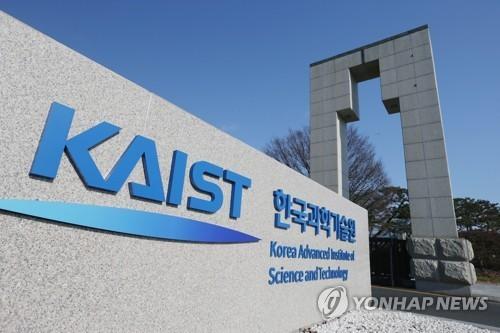
KAIST (Korea Advanced Institute of Science and Technology) announced on the 23rd that Point2 Technology, co-founded by Professor Bae Hyun-min of the School of Electrical Engineering, who is also the head of the startup center, and graduates, has attracted Series B extended investment from NVIDIA's venture investment arm, NVentures, and others.
With this investment, Point2 Technology has completed its Series B investment round, totaling 76 million dollars (approximately 100 billion Korean won), which is an investment received for securing personnel and marketing after achieving a certain scale.
The core of this investment is the 'e-Tube™' technology, developed by KAIST researchers and owned by Point2 Technology, which is a plastic waveguide-based data transmission technology using radio frequency (RF) signals.
This technology can extend the transmission distance 10 times compared to copper wires, while reducing power consumption and cost by one-third each compared to optical fibers. KAIST explained that it is being evaluated as a core technology for next-generation artificial intelligence (AI) infrastructure by dramatically reducing data transmission latency.
NVIDIA directly invested because the technology was recognized as an essential element for implementing future AI data center infrastructure.
CEO Sean Park said, "AI competitiveness is determined by data connection technology between semiconductors," adding, "Based on this investment, we will cooperate with global partners to accelerate the commercialization of next-generation AI infrastructure."
Bae Hyun-min, head of the startup center, stated, "This case is a representative achievement where original technology developed at KAIST has attracted investment from global big tech companies," adding, "We will continue to strengthen support so that startups with excellent technology can rapidly enter the global market."
Meanwhile, the KAIST Startup Center plans to establish a 'Global Growth Acceleration System' to support the global expansion of on-campus startups.
The strategy is to systematically support the scale-up of deep-tech startups by providing integrated support for the entire process from Proof of Concept (PoC) to investment attraction, based on a global investor network.
The KAIST Startup Center has attracted a cumulative total of 3.5 trillion won in investments over the past five years, achieved an average of 115 startups per year, and an average five-year survival rate of 92%.
As of 2024, there are 1,972 KAIST startups, with total assets of 105 trillion won, total sales of 38 trillion won, and a total employment of 61,252 people.
Newsletter
Get key news delivered to your email every morning
to leave a comment.