
to leave a comment.
Industry: "Re-evaluation after one year is burdensome, but sufficient countermeasures have been prepared"
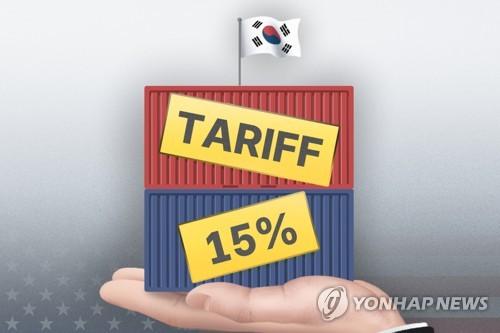
The pharmaceutical and bio industry is relieved after the US Donald Trump administration decided to impose a 100% tariff on pharmaceuticals not produced in the US, but apply a separate 15% tariff rate to South Korea.
This is because generics (copycat drugs) and biosimilars are tariff-free, and pharmaceuticals receive most-favored-nation treatment, allowing them to gain a competitive advantage over pharmaceuticals from countries where a 100% tariff applies.
On the 2nd (local time), President Trump signed a proclamation imposing a 100% tariff on pharmaceuticals not produced in the United States.
However, a separate tariff rate of 15% applies to South Korea, Japan, and Europe, which have separate trade agreements with the US, and 10% to the UK.
The domestic pharmaceutical and bio industry is relieved that it is in a relatively advantageous position in pharmaceutical exports to the US compared to competing countries such as China, India, and Singapore.
Considering that President Trump said he could impose a 200% tariff on pharmaceuticals in July 2024 and stated last September that he would impose a 100% tariff on pharmaceuticals from companies that do not build factories in the US, it is evaluated that South Korea achieved results in the pharmaceutical tariff negotiations.
The Korea Pharmaceutical and Bio-Pharma Manufacturers Association stated, "As South Korea will have a 15% tariff applied at the previous level, it is expected to maintain the existing response system without major short-term variables." However, it added, "In the mid-to-long term, diversification strategies such as restructuring the production and supply chain within the US and expanding into non-US markets are expected to be essential."
Hwang Ju-ri, head of the external cooperation division at the Korea Bio Association, said, "We are fortunate that the US government, amidst an unconventional measure of imposing a 100% tariff on most countries, classified South Korea as a major trade agreement country and applied an exceptional 15% tariff." She added, "We see this as an acknowledgment that South Korea is an ally for stabilizing the US pharmaceutical supply chain."
The US government's decision to re-evaluate generics, biosimilars, and related raw materials excluded from tariff imposition after one year could be a burden, but the industry expects no major changes in the re-evaluation because it has long prepared countermeasures such as local production.
Pharmaceutical and bio companies stated that they have completed preparations as President Trump's 'tariff threats' have continued since last year.
Celltrion[068270] said, "We have already transferred raw materials equivalent to about two years' supply within the US, and secured and are operating local production plants." It added, "We have also made plans for factory expansion, completely preparing mid-to-long-term measures."
It also added, "We plan to thoroughly respond so that no tariff-related policy, whatever it may be, will have an impact on the company in the future."
SK Biopharm[326030] also stated, "We have continuously responded to tariffs and are already producing in the US," and "We have completed preparations related to tariffs."
Samsung Biologics[207940], which completed the acquisition of GlaxoSmithKline (GSK)'s US biopharmaceutical manufacturing facility this week, maintained a cautious stance, saying, "We are closely monitoring the situation related to the announcement."
The industry also urged the government to respond with meticulous diplomatic efforts, as tariff rates by country under the future Trump administration could change frequently.
Director Hwang Ju-ri emphasized, "Moving forward, we will strive to prove that South Korea is the optimal economic security ally that can fill the US supply chain gap and allow the bio-industries of both countries to prosper together." She added, "We also request our government to continue close diplomatic negotiations based on the spirit of the Korea-US FTA so that this tariff measure does not disrupt the export front of domestic pharmaceutical and bio companies."
Newsletter
Get key news delivered to your email every morning
to leave a comment.