
to leave a comment.
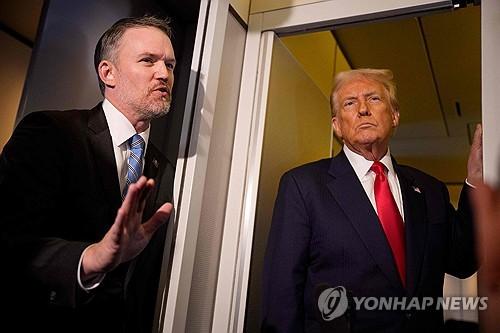
"Semiconductor companies relocating production facilities to the U.S. will be allowed a certain volume of imports"
Jamison Greer, the U.S. Trade Representative (USTR), announced on the 22nd (local time) that comprehensive product tariffs on semiconductors would be imposed at an appropriate time, but not immediately.
According to Reuters, Greer made these remarks during a speech at an expansion event held at Micron Technology's memory chip factory in Virginia, stating, "It's really important to impose tariffs on semiconductors."
Greer emphasized, "More important than protecting facilities like these (memory chip factories) is that we implement it (semiconductor tariffs) at the right time and at the right level."
He then stated, "There will be no immediate tariffs imposed (on semiconductors)."
Greer said, "These are complex supply chains. We've seen the offshoring of the semiconductor industry for decades," adding that during the "reshoring (relocation of production facilities back to the U.S.) phase," semiconductor companies would be allowed a certain volume of imports.
The semiconductor tariffs mentioned by Greer appear to refer to product-specific tariffs imposed under Section 232 of the Trade Expansion Act, citing reasons such as national security.
The U.S. is currently imposing a 25% tariff on semiconductors imported from foreign factories, including Taiwan's TSMC, for re-export to China and other destinations, following a proclamation signed by President Donald Trump in January.
However, despite President Trump's "100% tariff threat" in August of last year, a comprehensive tariff on all semiconductor imports has not yet been implemented.
At the swearing-in ceremony for Federal Reserve (Fed) Chair Kevin Warsh today, President Trump said that thanks to tariffs, "by the time I leave office, we will have 50% of the world's chip manufacturing capacity, and perhaps even more."
President Trump cited TSMC's semiconductor factory being built in Arizona as an example, saying, "They're coming in from Taiwan, and they're coming in from other areas."
After the U.S.-China summit on the 15th, President Trump stated in a Fox News interview that he "would like all semiconductor manufacturers in Taiwan to come to the United States."
He particularly claimed that Taiwan was able to develop because his predecessors did not impose tariffs on Taiwan's semiconductor sector, stating, "They (Taiwan) stole our semiconductors (semiconductor industry) for many years," and added, "We lost the semiconductor industry, but it's all coming back."
Combining the remarks of President Trump and Representative Greer, there is room to interpret that the comprehensive semiconductor tariffs under Section 232 of the Trade Expansion Act are being kept as a possible option within this administration's term and used as a leverage for reshoring semiconductor manufacturing.
Micron, where Greer spoke today, is one of the three major memory producers, along with Samsung Electronics and SK Hynix, accounting for 90% of the global DRAM market. Reuters reported that Micron plans to expand its investment in the U.S. by $30 billion, announcing a total investment of $200 billion.
Newsletter
Get key news delivered to your email every morning
to leave a comment.