
to leave a comment.
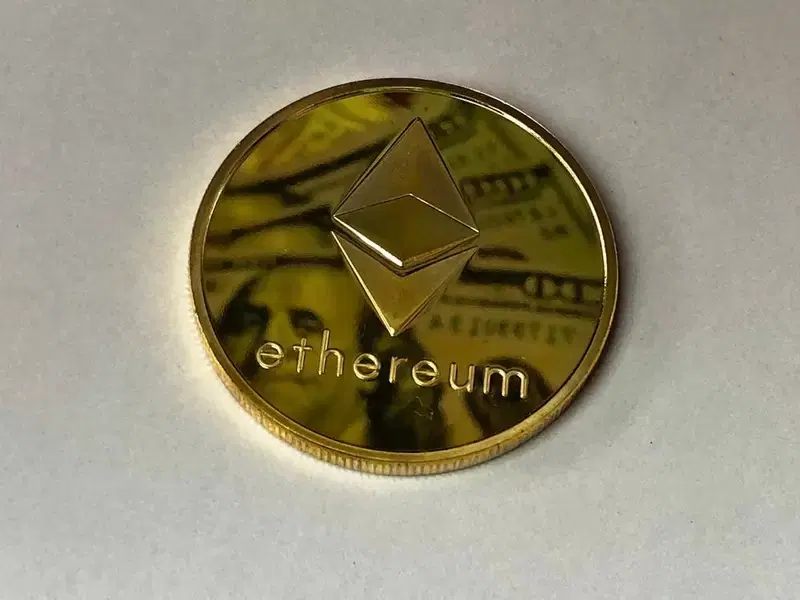
▲ Ethereum (ETH)
Ethereum (ETH) failed to sustain buying momentum at the bear market resistance band and turned downwards. This has led to a gloomy forecast that its asset value could be pushed down to the very bottom of the log regression band, which is the ultimate destination of a downtrend cycle.
On May 21 (local time), crypto analyst Benjamin Cowen stated in a video uploaded to his YouTube channel that Ethereum recently faced a clear rejection at the bear market resistance band and turned bearish. Cowen believes that Ethereum's uptrend cycle has virtually ended since Bitcoin (BTC), the market leader, fell below its 50-week moving average. He explained that applying log regression analysis based on the past 2019 model suggests a very high probability that Ethereum will re-touch the lower bound of the fair value band before embarking on a full-blown rally to break its previous all-time high. Even assuming a scenario without a recession, the analysis suggests that Ethereum would eventually need to drop to the April 2025 low on a higher time frame to form a true bottom.
As this price stagnation prolongs, a wave of capitulation is occurring across the market, with individual investors abandoning Ethereum and selling off their holdings. Cowen pointed out that the actual performance of investors who held Ethereum for more than 5 years has been sluggish, stating, "Over the past five years, Ethereum barely surpassed its previous all-time high, and even considering some interest income through staking, it incurred losses in terms of opportunity cost compared to simply holding cash." While the public may believe they can withstand price fear and hold on till the end, if asset values plummet over several years, they eventually hit psychological limits and liquidate their holdings, a trend evidenced by the current selling pressure on the charts.
Even from a macroeconomic business cycle perspective, the current crypto downturn follows the typical late-stage collapse sequence of asset markets. The majority of the global population is not interested in the fluctuations of virtual asset prices, so the true signal of an economic recession begins not with crypto, but with the collapse of traditional stock markets. In a late-stage business cycle environment, altcoins, positioned at the highest risk, peaked against Bitcoin starting in 2021 and were the first to decline, followed by Bitcoin peaking and then falling. The downward pressure on traditional stock markets has not yet fully begun, and cracks in risk assets could transfer to the stock market in the coming months.
Furthermore, as oil and energy prices surged due to geopolitical shocks in the Middle East, the market narrative abruptly shifted from recession fears to concerns about re-accelerating inflation. The expectations for the Federal Reserve's dovish monetary policy and potential interest rate cuts, anticipated at the beginning of the year, have completely vanished, and the risk of interest rate hikes has emerged. Consequently, market funds are rapidly moving away from high-risk assets like Ethereum to relatively safer assets like Bitcoin. As tight monetary policy prolongs, the Ethereum-to-Bitcoin relative value ratio has fallen even further below its February low when Bitcoin was at $60,000, setting new lows daily. If Bitcoin were to correct back to the $60,000 level, Ethereum would plunge much deeper, potentially to its April 2025 low, due to the collapse of this ratio.
In the short term, the most dangerous variable is the Bank of Japan's additional interest rate cut or hike stance and tightening measures scheduled for June. Analyzing historical trends in Ethereum's chart shows that immediately after the Bank of Japan announced policies to raise its benchmark interest rate and withdraw yen liquidity, there were repeated instances of sharp price declines in high-risk asset markets, accompanied by large-scale long position liquidations. If the Bank of Japan's tightening risk in June combines with Ethereum's technical resistance rejection momentum, there is a high probability of a final capitulation rally plunging to the very bottom of the regression band during June. For Ethereum to regain upward momentum in the long term, it must undergo a complete value liquidation through a sharp decline phase due to short-term tightening risks.
*Disclaimer: This article is for investment reference only, and we are not responsible for any investment losses based on it. The content should be interpreted for informational purposes only.*
Newsletter
Get key news delivered to your email every morning
to leave a comment.