
to leave a comment.
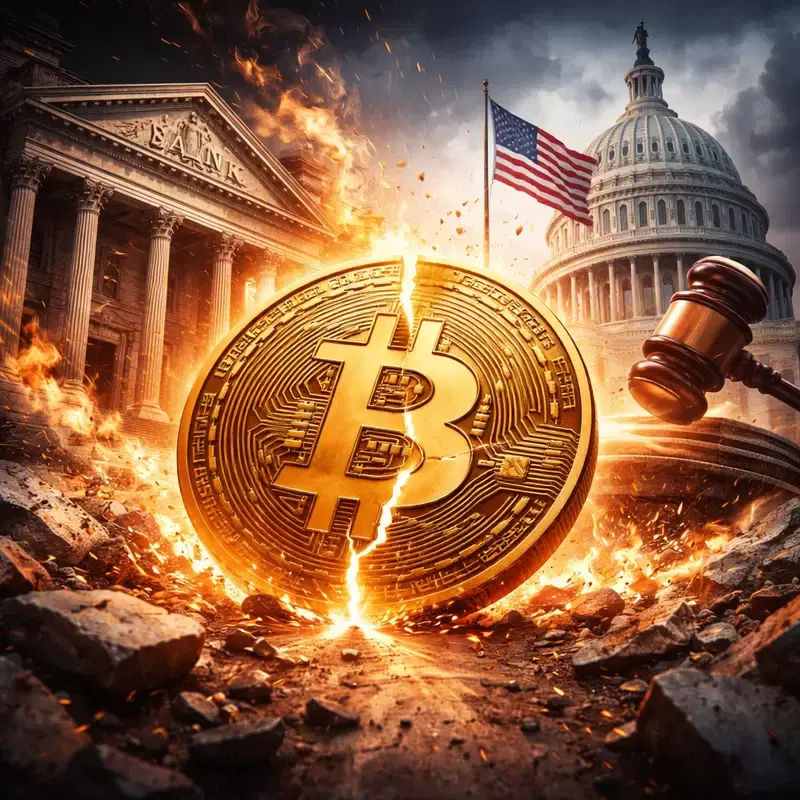
▲ Banks, U.S. Congress, Bitcoin (BTC), Cryptocurrency Regulation / ChatGPT Generated Image
The U.S. cryptocurrency market structure bill is on the verge of legislative failure due to intense lobbying from the banking sector and intertwined political interests.
Guy Turner, host of the cryptocurrency YouTube channel Coin Bureau, pointed out in a video released on April 27 (local time) that the bill's chance of passing, which exceeded 80% at the beginning of the year, has recently plummeted to 26%. Turner diagnosed that if Congress fails to process the bill by the end of May, the next legislative opportunity might not come until 2030 due to changes in the political landscape after the November midterm elections. Currently, there is a growing sense of crisis among market participants that missing this golden hour could lead to the stagnation of the virtual asset industry in the U.S. for several years.
The most significant legislative hurdle is the conflict of interest with traditional financial institutions over whether to allow interest payments on stablecoins. The banking sector is engaging in organized lobbying, fearing that approximately $500 billion in funds could leave institutional banks by 2028 if stablecoins offer returns similar to deposits. In particular, negotiations are facing difficulties as Senator Tom Tillis of North Carolina, where Bank of America's headquarters is located, and others are under strong pressure from the banking sector, demanding amendments to the bill.
Political variables are also a factor hindering the bill. Controversy has arisen over alleged preferential treatment for World Liberty Financial, a virtual asset project involving U.S. President Donald Trump's family, making it even more difficult to secure cooperation from the Democratic Party. This, coupled with the CFTC's staffing shortage to regulate the virtual asset market and demands for stronger security regulations due to Iran's attempts to evade sanctions using virtual assets, has rapidly weakened legislative momentum.
The response from the virtual asset industry is also mixed. While over 120 companies, including Galaxy Digital, sent an urgent joint letter to the Senate Banking Committee demanding prompt finalization of the bill, there are also skeptical views. Mark Yusco, chairman of Morgan Creek Capital, criticized the bill as a bad law that undermines the core value of decentralization in virtual assets and only strengthens the power of existing large financial institutions, questioning its effectiveness.
If the legislation ultimately fails, U.S. virtual asset companies will continue to face confusion, operating without clear legal grounds and subject to the SEC's individual enforcement actions and varying state-level regulations. Senator Cynthia Lummis emphasized that missing this opportunity would accelerate the outflow of U.S. virtual asset developers and capital to countries with clear regulations. If Congress fails to find a compromise before the Memorial Day recess in mid-May, the bill will effectively be scrapped.
*Disclaimer: This article is for investment reference only and we are not responsible for investment losses based on it. The content should be interpreted for informational purposes only.*
Newsletter
Get key news delivered to your email every morning
to leave a comment.