
to leave a comment.
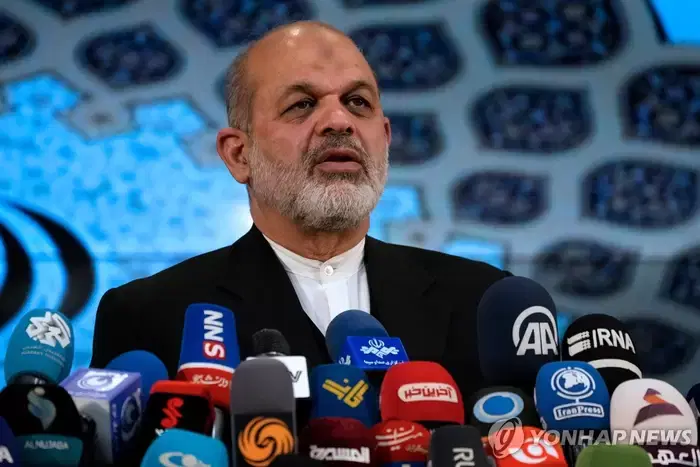
Commander Ahmad Vahidi of the Revolutionary Guard, representing hardliners in Iran
An analysis suggests that since the outbreak of the Iran war, the Islamic Revolutionary Guard Corps (IRGC), a hardline faction against the US, has effectively seized control of the decision-making process within Iran, making the possibility of a peace deal slim.
The U.S. think tank Institute for the Study of War (ISW) diagnosed the state of war between the U.S. and Iran in a special report on the Iran war, co-authored with the Critical Threats Project (CTP) on the 25th (local time).
According to the report, after Supreme Leader Ayatollah Ali Khamenei died in U.S. and Israeli airstrikes, Revolutionary Guard Commander Ahmad Vahidi and his key associates effectively seized power.
Commander Vahidi and his military inner circle are reportedly leading the decision-making process, completely excluding civilian officials, including Foreign Minister Abbas Araghchi.
The ISW pointed out that this is also the reason why the Iranian negotiation team, engaged in talks with the U.S., has consistently maintained an uncooperative stance.
It is reported that even during the first meeting held in Islamabad, Pakistan, Iranian officials maintained an ambiguous attitude regarding detailed matters.
This is interpreted to mean that they are not in a position to make independent decisions, and a unified negotiation stance has not yet been established within the regime.
The ISW specifically noted that the Revolutionary Guard's refusal to compromise with the U.S. makes substantial progress in negotiations unlikely.
Iran did convey its position regarding the end of the war when Foreign Minister Araghchi visited Islamabad, Pakistan, on the 24th.
However, Minister Araghchi immediately departed for Oman again, and plans for a direct meeting with the U.S. have not yet materialized.
Pakistani media also reported that Iran is refusing a direct meeting with the U.S. delegation and demanding the lifting of the U.S. naval blockade as a precondition for negotiations.
The ISW noted that this pattern of inflexibility, adherence to maximum demands, and the use of preconditions to delay or block negotiations reveals a consistent negotiation line led by the Revolutionary Guard.
Iranian media had previously explained Minister Araghchi's trip to Pakistan as an effort to strengthen trust with regional mediators, not an attempt at direct negotiations with the U.S.
Iran's Supreme Leader Mojtaba Khamenei
U.S. media report that Iran's Supreme Leader Ayatollah Mojtaba Khamenei has not fully seized power and largely relies on the Revolutionary Guard for state governance.
It is also observed that the Supreme Leader was severely injured in the airstrike, making normal activities and communication impossible.
It is also observed that the vacuum left by the Supreme Leader, who had previously mediated between the military and civilian officials, is intensifying factional conflicts between negotiation proponents and hardliners in Iran.
On this day, U.S. President Donald Trump canceled the dispatch of the U.S. negotiation team to Pakistan after confirming Iran's demands.
President Trump stated that it was a waste of time to spend long hours traveling to and from the negotiation venue in Pakistan for unsatisfactory proposals, confirming significant differences in views between the two sides.
However, he clarified that not sending a negotiation team does not mean resuming the war, stating, "If they want to talk, all they have to do is call," expressing his continued willingness to negotiate.
Newsletter
Get key news delivered to your email every morning
to leave a comment.