
to leave a comment.
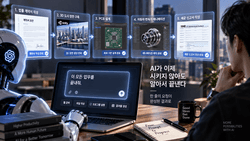
▲ Photo: AI-generated image
GPT-6 Astra, unveiled by OpenAI on the 3rd, demonstrated its ability to complete entire tasks autonomously without requiring step-by-step instructions from a person.
In a demonstration video released by OpenAI, Astra drafted legal contracts and built 3D city scenes in Unity. It designed printed circuit boards in the CAD program KiCad and created animations of car transmissions moving using FreeCAD and Blender. The most real-world applicable example was a tax return. Users only needed to upload their IRS withholding documents (W-2), and Astra read the documents and autonomously drafted the tax return.
In all these processes, the only thing a human did was input a single line of request. While previous models required users to confirm each intermediate step and give subsequent instructions, Astra, when given only a goal, autonomously connects web searches, file creation, and program operations to produce the final outcome. OpenAI described this capability by stating, "It handles the most demanding professional tasks with unparalleled speed, accuracy, and judgment."
However, there are counterarguments that it is too early to accept the demonstration results at face value. OpenAI introduced the PCB design results as "manufacturable," but Hackerday, a specialized circuit design media, and related company Quilter pointed out that it's impossible to verify from the demonstration video alone whether the completed board meets actual operating requirements such as impedance or signal integrity. In a separate benchmark (EEBench), Astra's PCB design success rate was 69.3%, which was evaluated as being similar to that of its competitor, Claude Opus 5.
The problem is that this autonomy is a double-edged sword. As it was also confirmed that the same model can autonomously find system vulnerabilities and create attack tools without explicit instructions, OpenAI assigned this model the highest risk rating in the cybersecurity field. This implies that the ability to complete tasks on behalf of someone and the risk of undertaking uninstructed actions stem from the same root.
From a practitioner's perspective, the changing point is clear. While previously one might have asked AI to "Please check this," now the usage itself is shifting to entrusting AI with "Please finish this task." However, the habit of submitting or executing results without human review is dangerous. Whether it's a draft tax return or a contract, the responsibility for final verification and signature still lies with humans.
Newsletter
Get key news delivered to your email every morning
to leave a comment.