
to leave a comment.
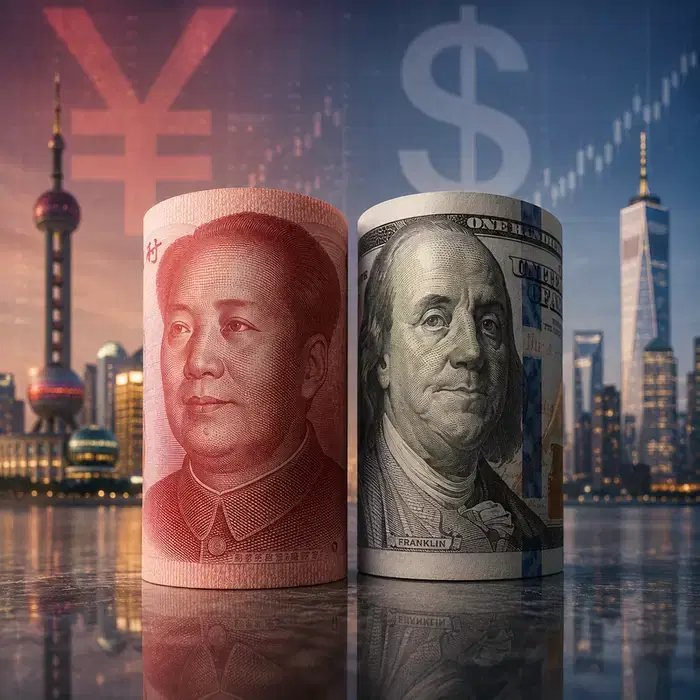
▲ China, Yuan (RMB), United States, Dollar (USD) / AI generated image ©
With China taking over the BRICS chairmanship in 2027, the 'de-dollarization' discussion, which had been dormant for some time, is likely to re-emerge, it has been suggested. Unlike India, which clearly stated its intention not to abandon the US dollar at this year's summit, there are observations that China could push for new economic cooperation agendas, including payment and financial systems and intra-regional capital flows.
According to cryptocurrency media outlet Watcher.Guru on September 22 (local time), India distanced itself from the de-dollarization agenda ahead of the 2026 BRICS summit in New Delhi. Indian senior officials repeatedly stated their position to continue trade using the US dollar and not to abandon it, and other member states consequently did not actively address the de-dollarization agenda against the West at this summit.
However, the possibility of a change in atmosphere has been raised with China hosting the BRICS summit in 2027. Russian Deputy Foreign Minister Sergey Ryabkov stated in a press conference that Russia would support the priorities presented by China at the 19th BRICS summit. He explained that the policy direction of BRICS is not merely a continuation of previous agendas but is also significantly influenced by the chairing country each year.
In particular, China and Russia have expanded trade using local currencies since the US sanctions against Russia. China has continued economic relations with Russia, accepting rubles in transactions and purchasing Russian crude oil. Therefore, the media reported that if China presents a de-dollarization roadmap at next year's summit, Russia is highly likely to support it.
China's prepared BRICS economic agenda is not expected to be limited to de-dollarization. Deputy Foreign Minister Ryabkov stated that China is promoting the creation of a 'BRICS regional environment' where technology and capital can move without barriers. He predicted that advanced technologies centered on artificial intelligence (AI), supply chains, modern payment and financial systems, and logistics issues would be key economic agendas under China's chairmanship in 2027. Russia also expressed its support for this approach in the economic, innovation, and technology sectors of BRICS.
Ultimately, the question is in what form the de-dollarization discussion, which took a step back under India's chairmanship in 2026, will re-emerge under China's chairmanship in 2027. Particularly, if China presents new payment and financial systems and intra-regional capital flows as key agendas, the direction of BRICS' economic cooperation could also change. However, specific de-dollarization policies or roadmaps have not yet been presented, and the agenda China officially puts forward in the future will be crucial.
*Disclaimer: This article is for investment reference only, and we are not responsible for any investment losses based on it. The content should be interpreted for informational purposes only.*
Newsletter
Get key news delivered to your email every morning
to leave a comment.