
to leave a comment.
The Information reports, citing sources
75-81% reduction from initial plan… In preparation for potential HBM4E supply shortages
Nvidia is considering equipping its next-generation graphics processing unit (GPU) 'Rubin Ultra' with less memory than initially planned, in response to high-bandwidth memory (HBM) shortages, reported US information outlet The Information on the 6th (local time).
Three sources said that Nvidia has been testing at least three samples of the Rubin Ultra GPU in recent weeks, and some of these samples have less memory than what was initially announced.
According to sources, one of the reasons Nvidia is considering lowering memory specifications is that memory suppliers may face difficulties producing enough HBM4E to meet the Rubin Ultra's scheduled launch timeline….
The media reported that Nvidia's customers responded that while lower memory specifications could affect performance, it could also be an advantage for customers seeking cost savings, as prices are likely to be lower.
Jensen Huang, CEO of Nvidia, first unveiled the Rubin Ultra at a developer conference last year, stating that each GPU would be equipped with 1 terabyte (TB) of HBM4E. HBM4E was planned to consist of 16 memory stacks.
However, the samples currently being tested have fewer stack layers and less memory capacity per die. Some samples use HBM4, sources said.
According to these sources and an Nvidia customer, the total memory capacity of some tested samples was only 192 gigabytes (GB), while other samples were around 256GB. This is significantly less than the initially announced 1TB.
Nvidia's 'Vera Rubin', currently in mass production, is equipped with up to 288GB of HBM4, meaning the Rubin Ultra test version would have less memory than the previous generation.
This amounts to a 75-81% reduction from the initial plan, and an 11-33% reduction from the previous generation.
This is in contrast to Andrew Bell, Nvidia's Senior Vice President of Hardware Engineering, who stated in mid-last month, "We have been proactively preparing for memory issues, so there will be no supply problems for the time being."
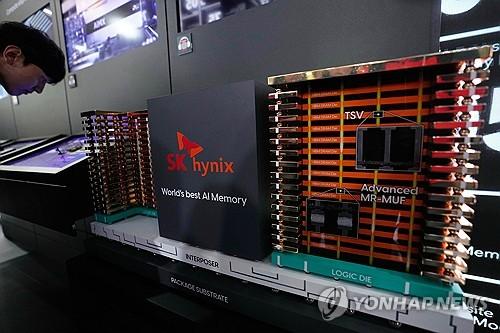
HBM4E is designed to transfer more data and improve power efficiency than existing HBM4, but this requires making chips more densely packed and increasing electrical connection speeds, leading to high packaging difficulty.
EpochAI, a technology research firm, evaluated that HBM can account for more than half of the component cost of advanced AI chips, so a version with reduced memory could significantly lower prices while still being suitable for various AI applications.
In response to these supply constraints, Nvidia formed a $500 billion (approximately 712.5 trillion won) partnership with SK Group late last month to jointly develop HBM4 and HBM4E in various configurations.
Raj Mirpuri, Nvidia's Vice President of Global AI Cloud and Infrastructure, stated that this partnership is "to secure a stable supply of HBM" and that SK Hynix will invest in expanding HBM production capacity for Nvidia's supply.
Earlier in June, SK Hynix announced that it would double its memory chip production capacity within the next five years.
Nvidia has not yet finalized the specifications and selling price of the Rubin Ultra, and sources said there is still time to adjust the design based on memory supply conditions, costs, and customer demand before shipment late next year.
Newsletter
Get key news delivered to your email every morning
to leave a comment.