
to leave a comment.
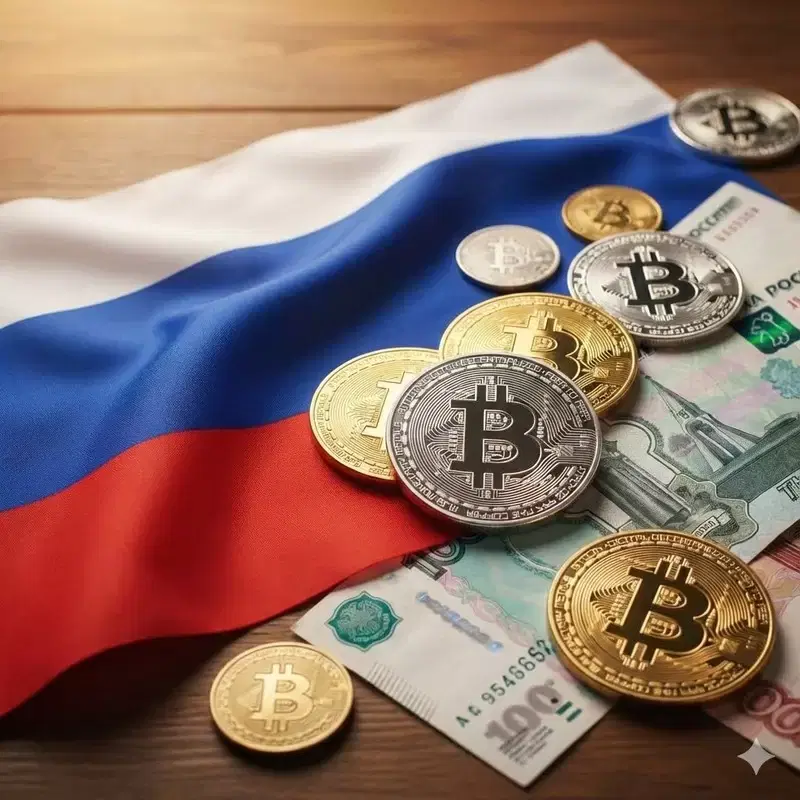
▲ Russia, Bitcoin (BTC)/AI generated image
Instead of fully opening up cryptocurrencies, Russia has embarked on establishing a system for their limited use under state control. The plan is to maintain the ruble's status for domestic payments, while digital assets will be selectively used only for international trade settlements.
Cointelegraph reported on May 24 (local time) that Russia's new cryptocurrency regulatory direction focuses on global trade rather than domestic payments. Russian authorities view digital assets not as everyday financial instruments but as geopolitical strategic tools. Regulators do not recognize digital currencies as substitutes for the ruble and treat them only as limited means to support external economic activities.
The Russian State Duma approved a cryptocurrency regulation bill in its first reading in April 2026. The bill defines rules for cryptocurrency circulation, qualification requirements for market participants, and supervisory bodies. The core is centralized regulatory control. The Central Bank of Russia has been designated as the responsible supervisory body, tasked with issuing licenses to operators, monitoring transactions, and enforcing compliance.
Russian authorities have drawn a clear line for domestic use. The ruble remains the sole legal tender for domestic payments, and cryptocurrencies are excluded from everyday transactions for individuals and businesses. The Central Bank of Russia has warned that allowing digital assets for domestic payments could undermine monetary stability and supervisory efficiency.
The key exception in the bill is international trade. Companies involved in cross-border transactions can use cryptocurrencies for contract settlements when traditional banking channels are blocked. Russia had experimentally allowed limited use of cryptocurrencies for foreign trade settlements in 2024, and this bill formalizes and expands that direction.
This strategy is intertwined with Western sanctions. Sanctions from Western countries have significantly restricted Russia's dollar payment routes and access to global banking networks. Russia is pursuing a plan to reduce reliance on traditional intermediaries by using digital assets as an alternative mechanism for specific trade settlements. However, the government has chosen a closed licensing model that prioritizes supervision rather than unlimited participation.
The operation of the new system will be led by the Central Bank of Russia. The Central Bank will issue licenses to approved operators, determine participating companies, and manage compliance with rules. Companies already operating within test regimes or existing financial structures may find it easier to gain access. Cryptocurrency activities are expected to be limited to approved entities and supervised bodies, rather than being open to the entire broad market.
Outside of foreign exchange trade settlements, individuals' and businesses' access to cryptocurrency investments is also controlled. Past proposals by the Central Bank of Russia focused on participation by specially qualified investors under an experimental regime. Under the 2026 bill, unqualified individuals can also purchase cryptocurrencies after completing a suitability test and within annual limits set by regulatory authorities. Qualified investors face relatively fewer restrictions.
Russia's expanded use of cryptocurrencies for foreign trade is likely to come under scrutiny from Western authorities. Sanction pressures have already affected Russia's cross-border payment channels, and banks in several key trading partner countries have become more cautious in processing Russia-related transactions due to the risk of secondary sanctions. Russian officials have acknowledged that alternative payment methods, including cryptocurrencies, are being used in international settlements.
Cryptocurrencies do not completely eliminate sanction-related risks. Trade partners, exchanges, custodians, and payment intermediaries may be subject to sanction screening, reporting obligations, and restrictive measures by foreign authorities. The actual scope of their use in trade settlements is also limited by liquidity, custody requirements, transaction monitoring, and price volatility.
*Disclaimer: This article is for investment reference only, and we are not responsible for any investment losses based on it. The content should be interpreted for informational purposes only.*
Newsletter
Get key news delivered to your email every morning
to leave a comment.