
to leave a comment.
Inflation surges due to Iran war aftermath... Wall Street bets on interest rate hike within the year
Majority of Fed members "cannot rule out interest rate hike" hawkish stance... Chairman alone has 'limits' to policy change
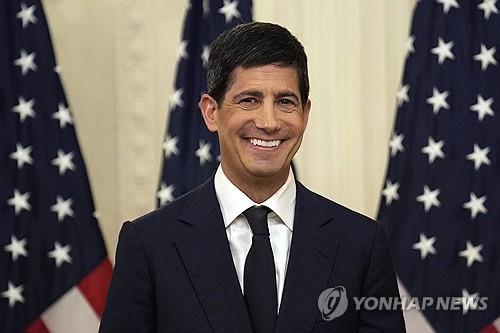
On the 22nd (local time), Kevin Warsh, nominated by US President Donald Trump as the new chairman of the Federal Reserve (Fed), the central bank of the United States, took office. However, analysis suggests that it will be difficult for the Fed led by Warsh to immediately implement interest rate cuts as President Trump expects.
In April, the US Producer Price Index (PPI) rose by 6.0% year-on-year, the highest since 2022. Earlier, the US Consumer Price Index (CPI) also recorded its largest increase in about three years in April, rising by 3.8% year-on-year.
Contrary to President Trump's wishes, the market believes that the Fed will not be able to cut interest rates, and instead, its next move will be an interest rate hike.
According to FedWatch by the Chicago Mercantile Exchange (CME), the interest rate futures market reflected an approximately 70% probability that the Fed would raise the benchmark interest rate one or more times by December of this year. No possibility of an interest rate cut within the year was reflected at all.
In the bond market, ultra-long-term securities such as 30-year US Treasury bonds recently surpassed 5.1%, reflecting the risk of rising inflation, reaching their highest level since 2007.
On the other hand, the labor market appears relatively stable, with the unemployment rate remaining at 4.3%. The asset market is rather concerned about overheating, as the three major indices of the New York stock market have recently been breaking all-time highs one after another.
Wall Street experts believe that if inflation does not decline rapidly, it will be difficult for the Fed to even freeze interest rates at current levels in the future, let alone cut them.
Michael Feroli, US economist at JPMorgan, told the New York Times (NYT) that "the current monetary policy does not appear restrictive" and predicted that the Fed would maintain its interest rate freeze this year and begin raising rates next year.
Chairman Warsh had taken a somewhat ambiguous stance on interest rate policy during his previous confirmation hearing.
However, even if he wanted to cut interest rates, Wall Street's assessment is that it would be difficult for the Fed's policy stance to change immediately just because one chairman has changed, given the decision-making structure of the Federal Open Market Committee (FOMC), which determines policy by majority vote.
The FOMC, the Fed's monetary policy-making body, has a total of 12 voting members, including 7 Fed governors, including Chairman Warsh, and 5 presidents of regional Federal Reserve Banks.
The minutes of the immediately preceding FOMC meeting held on April 28-29 confirmed that a majority of members expressed a hawkish (pro-monetary tightening) stance, indicating that if inflation continues to exceed the target level, the benchmark interest rate may need to be raised.
Even Fed Governor Christopher Waller, who has long been considered dovish (pro-monetary easing), aligned with this view, stating in a public lecture held in Frankfurt, Germany, today, "If inflation does not subside soon, the possibility of future interest rate hikes can no longer be ruled out."
With Chairman Warsh joining the new Fed board, Stephen Myron, a former economic advisor to President Trump and a strong 'dove' (pro-monetary easing), stepped down from his position as governor. Therefore, the number of Trump-appointed individuals on the Fed board remains unchanged at three.
Ahead of his inauguration, Chairman Warsh emphasized the need for reforms to the Fed system, such as refraining from forward guidance on monetary policy. However, even this is unlikely to be easy to achieve without the support of other members.
Economic experts believe that Chairman Warsh's initial actions will be an important test that will determine the credibility of the Fed's policy.
Mark Somerlin, former Deputy Director of the White House National Economic Council (NEC), who was also considered for the Fed chairmanship along with Chairman Warsh, told the Wall Street Journal (WSJ) that "making a dovish mistake in the current economic environment risks making the long-term bond market more unstable."
Nick Timiraos, a WSJ reporter often called the Fed's 'unofficial spokesperson' for his accurate insights into the intentions of senior Fed officials, said, "President Trump chose Warsh as chairman to realize the interest rate cuts he had been demanding for the past year." He added, "Now, the question is suddenly being raised whether Warsh can politically withstand raising interest rates, the exact opposite."
Newsletter
Get key news delivered to your email every morning
to leave a comment.