
to leave a comment.
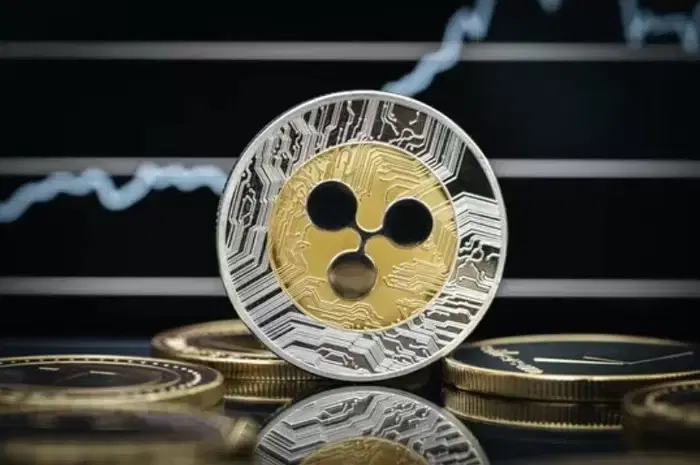
▲ XRP
XRP has once again been cited as a key investment asset in long-term price forecasts. With the conclusion of the lawsuit between Ripple and the U.S. Securities and Exchange Commission, the biggest uncertainty that had hindered institutional entry has disappeared. Analysis suggests that the price trajectory over the next 10 years will depend on its integration into actual payment infrastructure.
On May 21 (local time), 24/7 Wall St. analyzed how high XRP's price could rise over the next decade, noting that it has maintained its position as the 5th largest cryptocurrency by market capitalization despite enduring lawsuits, bear markets, and regulatory confusion.
According to the article, Ripple and the SEC withdrew all appeals in August 2025, and Ripple paid a net fine of $50 million. Additionally, it received back $75 million that had been tied up in escrow. The court clarified that selling XRP in the secondary market does not violate securities law.
Immediately after the lawsuit ended, XRP's price surpassed $3, and trading volume more than doubled. However, XRP has since fallen significantly from its July 2025 peak of $3.56. 24/7 Wall St. pointed out that the fact that the lawsuit ended remains unchanged, and market attention has now shifted to the U.S. crypto market structure bill, which could officially classify XRP as a utility asset. This bill passed the Senate Banking Committee on May 14 with 15 votes in favor and 9 against, but still needs to undergo a full Senate vote.
Geoffrey Kendrick of Standard Chartered suggested a long-term price target for XRP of $28 by 2030. While he lowered the 2026 target from $8 to $2.80 during the February sell-off, he actually raised the long-term outlook. 24/7 Wall St. provided its own analysis, suggesting a range of $30 to $40 by 2035, as Standard Chartered did not provide projections beyond 2030.
In the year-by-year forecasts, the 2026 target price was set at $2.80, with support at $1.90 and resistance at $3.50. The 2027 target was $5, 2028 was $9, 2029 was $15, and 2030 was $28. Beyond that, projections suggested it could rise to $24 between 2031 and 2032, $32 between 2033 and 2034, and $38 by 2035.
24/7 Wall St. emphasized that these forecasts are possibilities, not guaranteed prices. Reaching $2.80 by 2026 requires improved macroeconomic conditions, and entering the single-digit price range by 2028 requires the passage of the U.S. crypto market structure bill and an expansion of XRP spot ETF inflows to over $4 billion. The condition for reaching $28 by 2030 is for XRP to establish itself as a core global financial infrastructure, beyond being a mere trading asset.
If the $28 projection is realized, XRP's market capitalization would reach approximately $1.73 trillion. This is close to Bitcoin's (BTC) market capitalization at its peak in October 2025 and aligns with the Fibonacci 161.8% extension line around $27. 24/7 Wall St. analyzed that after 2030, upward momentum might cool, leading to a correction to around $24 between 2031 and 2032. Subsequently, if actual payment transaction volume expands, a second upward phase could emerge, reaching around $38 by 2035.
Bullish factors cited include Ripple's on-demand liquidity service and RippleNet adoption, XRP spot ETF inflows, and the U.S. crypto market structure bill. According to the article, XRP spot ETFs have already recorded net inflows of approximately $1.39 billion, with May being noted as the month with the strongest inflows. Analysis suggests that if the bill officially classifies XRP as a utility asset, it could provide the regulatory certainty that banks and payment providers have been waiting for for years.
Conversely, bearish factors are also clear. Ripple still holds a large amount of XRP in escrow, and up to 1 billion XRP can be released into the market each month. It's pointed out that even if demand is strong, accelerating supply pressure could weigh on prices. Furthermore, XRP remains sensitive to Bitcoin's movements. From October to November 2025, while Bitcoin fell from $126,000 to $80,000, XRP dropped 46% from $3.40 to $1.80. In early February, when Bitcoin fell from $80,000 to $60,000, XRP declined 40% from $1.85 to $1.12.
24/7 Wall St. believes that XRP's 10-year outlook depends on Ripple's execution capabilities, market demand, and the pace of change in the financial system. The conclusion of the lawsuit, the launch of spot ETFs, and progress in the Senate procedures for the U.S. crypto market structure bill are cited as reasons why XRP has more long-term catalysts than ever before.
*Disclaimer: This article is for investment reference only, and we are not responsible for any investment losses based on it. The content should be interpreted for informational purposes only.*
Newsletter
Get key news delivered to your email every morning
to leave a comment.