
to leave a comment.
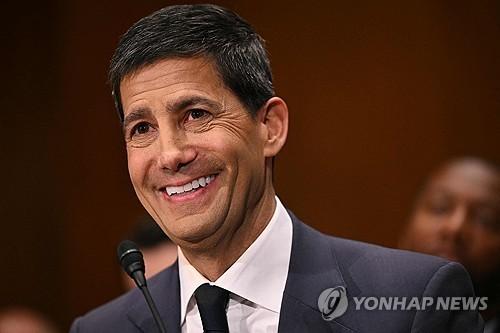
Following the 'Fed Governor' confirmation bill the previous day, the chairman's confirmation bill also passed.
Despite Trump's hopes for 'interest rate cuts', inflation concerns rise; future actions draw attention.
The confirmation bill for Kevin Warsh, the next chairman nominee of the Federal Reserve (Fed), the central bank of the United States, passed the US Federal Senate on the 13th (local time).
The Senate put Warsh's confirmation bill to a vote in a plenary session on this day, resulting in 54 votes in favor and 45 against, thus passing the bill.
The confirmation vote showed clear partisanship. All 53 Republican senators voted in favor.
Among the 47 Democratic senators, only Senator John Fetterman (Pennsylvania), who has consistently shown pro-Trump tendencies, joined the 'yes' camp, and Senator Kirsten Gillibrand (New York) did not vote.
Previously, the Senate passed Warsh's confirmation bill as a Fed Governor the day before, and with the chairman's confirmation bill also passing today, Warsh can immediately take office as the Fed Chairman after the current chairman Jerome Powell's term ends.
The term of the Fed Chairman is four years, and current Chairman Powell's term ends on the 15th. Warsh is expected to take office as the new Fed Chairman as early as this week.
Chairman Powell will step down from the chairmanship but has decided to remain a Fed Governor. Accordingly, Warsh will succeed Steven Myron as a governor, who served as the White House National Economic Advisor in the second Trump administration.
Furthermore, Warsh will directly chair the Federal Open Market Committee (FOMC) meeting scheduled for the 16th-17th of next month as chairman. The FOMC meeting is the body that decides the US benchmark interest rate.
Warsh emphasized the independence of the Fed at the Senate hearing, stating his intention to decide monetary policy based on the Fed's own judgment rather than the President's demands.
However, US President Donald Trump has strongly criticized current Chairman Powell for hindering the government's economic policies by not cutting interest rates in a timely manner, and had high expectations for interest rate cuts when nominating Warsh as chairman.
Consequently, the future actions of 'Warsh's Fed' are drawing attention, but various economic indicators are not positive enough for the Fed, led by Warsh, to implement interest rate cuts as President Trump expects.
Due to the rise in energy prices caused by the US-Iran conflict, the US Producer Price Index (PPI) for April, announced by the US Department of Labor's Bureau of Labor Statistics today, rose by 6.0% year-on-year. This increase was the highest since December 2022.
In particular, following the announcement yesterday that the April Consumer Price Index (CPI) rose by 3.8% year-on-year, marking the largest increase in approximately three years, today's PPI also showed similar figures, heightening concerns about rising inflation.
The Fed cut interest rates three consecutive times in September, October, and December last year, then froze the benchmark interest rate at 3.50-3.75% in January, March, and April this year, and the market widely expects no interest rate cuts this year.
Newsletter
Get key news delivered to your email every morning
to leave a comment.