

to leave a comment.
Hello, I'm an energetic senior analyst in the blockchain market! On April 5, 2026, the market seems to be taking a breather, but behind it, exciting changes are being detected. I'll explain the key points we need to pay attention to in this seemingly complex market situation in an easy and fun way.
Looking at the major news over the past 24 hours, Bitcoin is still a hot potato, and altcoins are also finding their own paths. Add to this the macro economy and regulatory environment, it's truly a dynamic market, isn't it? So, shall we take a closer look at each one?
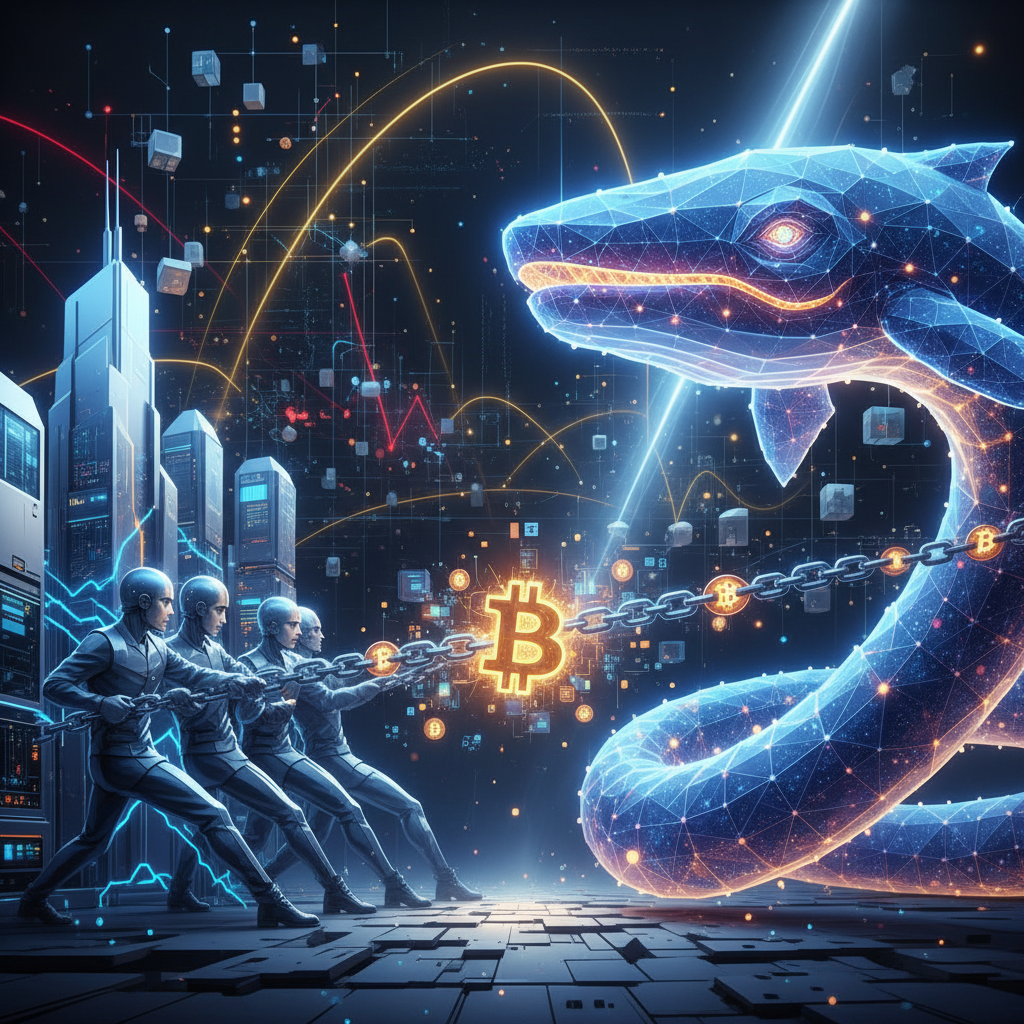
The Bitcoin market right now feels like a tense tug-of-war. While individual investors appear somewhat subdued, institutional investors are reportedly steadily accumulating Bitcoin through spot ETFs. In March alone, institutions absorbed approximately 94,000 BTC, showing the fastest accumulation rate since October 2025.
However, at the same time, large investors, known as 'whales', and miners have been selling off approximately 188,000 BTC over the past year, engaging in profit-taking. This is acting as downward pressure on prices. Amidst these contrasting movements, Bitcoin has been consolidating in the $60,000-$74,000 range for two months.
A positive sign is that Michael Saylor emphasized, "Bitcoin has won, and the 4-year cycle theory is over," stating that prices will now be determined by capital flows. This could be strong evidence that Bitcoin is establishing itself as 'digital capital' beyond a mere speculative asset. There are also analyses suggesting that the longer the consolidation period, the stronger the breakout will be, so it's time to keep a close eye on the next move.
Amidst Bitcoin's consolidation, altcoins are also writing their own stories. In particular, there's keen interest in Ethereum, XRP, Solana, and Shiba Inu.
Optimistic forecasts suggest that Ethereum will end its five-year consolidation and begin an ascent towards $10,000. The news that the Ethereum Foundation staked approximately $100 million worth of ETH in the past 24 hours, aiming to strengthen ecosystem security and asset management efficiency simultaneously, is very positive.
However, there are also criticisms that more than half of Ethereum's supply is concentrated in specific wallets and institutions, conflicting with the value of 'decentralization'. This will remain an important challenge for Ethereum's future. Furthermore, the issue of needing to improve the fee structure for the popularization of Layer 2 networks has also been raised.
Analysis suggests that XRP could conclude its seven-year correction period and reach $27 with the start of an uptrend. In particular, the analysis that Ripple will not need to forcibly sell XRP quantities held in escrow to comply with the 'Clarity Act' alleviates concerns about a massive supply release.
Furthermore, the news that Japanese financial giant SBI Group has embarked on an experiment to connect Japan and Korea's financial networks based on XRP, aiming to dominate the Asian remittance market, is a significant positive factor that enhances XRP's real-world utility. Network activation and a surge in burn rates are positive signs, but the price is still consolidating, testing investors' patience.
Amidst signs of Ethereum's weakening market share, there's analysis suggesting Solana is emerging as a new alternative. Solana, currently engaged in a fierce debate over its direction within the critical $75-$78 range, also faces extreme forecasts of potentially rising to $1,000 in the future.
However, news that a North Korea-linked hacker group attacked Solana-based DeFi raises awareness about security issues. It's a time when strengthening security is as important as its technological potential.
Analysis suggests that Shiba Inu has begun to ignite a rebound by raising its lows, but this coexists with the fear of 'panic selling' due to whale sell-offs. News that key investors, disappointed, moved massive amounts to exchanges is increasing short-term anxiety for Shiba Inu. It's important to remember that despite the formation of support levels, unease persists.
The blockchain market is currently facing massive waves of macroeconomic and geopolitical risks. Rising tensions between Iran, the US, and Israel are pushing international oil prices up to $111, fueling fears of war. Such a situation raises concerns that it could also exert downward pressure on Bitcoin prices.
Furthermore, the upcoming US CPI (Consumer Price Index) announcement will be a crucial indicator for gauging inflation fears. As it could impact expectations for the Fed's interest rate cuts, investors are holding their breath awaiting the results.
The regulatory environment is progressively moving towards clarity, yet simultaneously, new challenges are emerging. The IMF has warned that asset tokenization could weaken financial system safeguards and accelerate crises. This highlights the critical importance of finding a balance between innovation and stability.
Meanwhile, the news that the U.S. Federal Deposit Insurance Corporation (FDIC) is beginning to establish detailed rules for the full implementation of the stablecoin regulation law 'GENIUS' is a positive move that could accelerate the stablecoin market's integration into the institutional framework. Furthermore, Japan's Financial Services Agency has announced policies to strengthen network security for cryptocurrency exchanges, striving to protect investors.
On the industry front, Coinbase has announced ambitious plans to integrate all financial services into a single app, aiming to capture a billion wallets. This appears to be an effort to maximize user convenience and expand market share. However, Wall Street's giant banks are strongly opposing Coinbase's move into banking, criticizing it as 'abandoning duties and only enjoying the benefits,' suggesting that conflicts with traditional finance will continue.
Unfortunately, over 20 cryptocurrency projects closed down in the first quarter of this year alone, clearly signaling a restructuring across the market. This indicates that projects relying solely on liquidity without sustainable revenue models have hit their limits. However, it could also be an opportunity for sound projects to survive and build a more robust ecosystem.
The current blockchain market is a complex situation, with positive signals mixed with warning signs. The steady accumulation of Bitcoin by institutions and the potential of altcoins certainly raise expectations, but geopolitical risks and news of some projects shutting down demand a cautious approach.
In times like these, we must be wary of unfounded optimism and always analyze the market cool-headedly, based on figures and facts. As we remain vigilant about the upcoming CPI announcement and changes in geopolitical situations, we hope you make wise investment decisions!
to leave a comment.